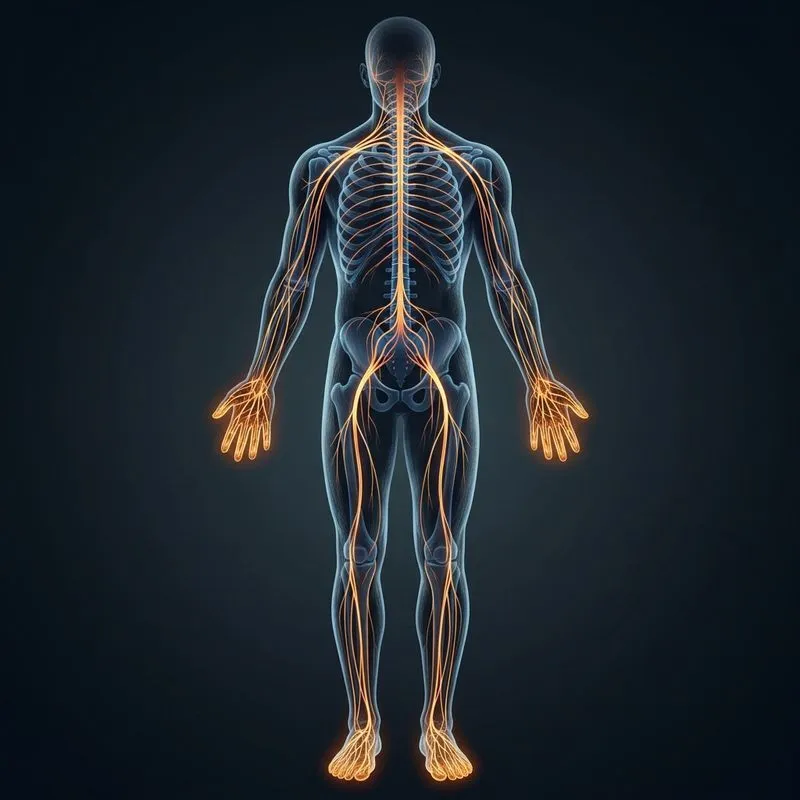
More Than 20 Million Americans Have Peripheral Neuropathy
Peripheral neuropathy — damage to the nerves outside of the brain and spinal cord — is one of the most prevalent neurological conditions in the United States. It causes pain, numbness, tingling, and weakness, most commonly in the hands and feet.
Despite its prevalence, it is frequently misunderstood, under-diagnosed, and undertreated.
What Is the Peripheral Nervous System?
The peripheral nervous system (PNS) is the vast network of nerves that carries signals between your central nervous system (brain and spinal cord) and the rest of your body. When these nerves are damaged or destroyed, signals are distorted or lost — producing the characteristic symptoms of neuropathy.
Nerves are classified by function:
- Sensory nerves: Detect temperature, pain, touch, vibration
- Motor nerves: Control muscle movement
- Autonomic nerves: Regulate involuntary functions (heart rate, digestion, blood pressure)
Peripheral neuropathy can affect any or all of these nerve types.
The Most Common Causes
1. Diabetes (Diabetic Neuropathy)
Diabetic neuropathy accounts for approximately 60–70% of all peripheral neuropathy cases in the U.S. Chronic high blood glucose damages small blood vessels that nourish peripheral nerves, causing progressive nerve fiber loss — often starting in the feet.
Early symptoms: Burning pain, electric-shock sensations, or complete numbness in the toes that gradually ascends.
2. Chemotherapy-Induced Peripheral Neuropathy (CIPN)
Many chemotherapy agents — particularly taxanes (paclitaxel) and platinum-based drugs (oxaliplatin, cisplatin) — are directly neurotoxic. CIPN affects an estimated 30–40% of cancer patients undergoing chemotherapy.
3. Alcohol-Related Neuropathy
Chronic alcohol use causes nutritional deficiencies (particularly B1/thiamine, B6, and B12) and has direct toxic effects on nerve fibers. Alcoholic neuropathy is reversible only if alcohol cessation occurs early.
4. Autoimmune Neuropathies
Conditions such as Guillain-Barré syndrome (GBS), chronic inflammatory demyelinating polyneuropathy (CIDP), and vasculitic neuropathies occur when the immune system attacks peripheral nerves. These can progress rapidly and require urgent neurological evaluation.
5. Nutritional Deficiencies
- Vitamin B12 deficiency: Extremely common in adults over 50, vegetarians, vegans, and metformin users. Causes subacute combined degeneration of the nervous system.
- Vitamin B6 toxicity: Paradoxically, excessive B6 supplementation (>200mg daily) can itself cause sensory neuropathy.
- Vitamin E deficiency: Causes a spinocerebellar syndrome with neuropathy.
6. Idiopathic (No Identifiable Cause)
In approximately 23% of cases, no underlying cause can be identified despite thorough workup. This is termed “cryptogenic” or idiopathic neuropathy and is more common in adults over 60.
Recognizing the Symptoms
| Symptom | Nerve Type Affected |
|---|---|
| Burning, shooting, or electric pain | Sensory (small fiber) |
| Numbness or “dead” sensation | Sensory |
| Tingling or “pins and needles” | Sensory |
| Muscle weakness or foot drop | Motor |
| Loss of balance when eyes closed | Sensory (proprioception) |
| Abnormal heart rate or blood pressure | Autonomic |
| Digestive dysfunction or sexual issues | Autonomic |
Diagnostic Workup
A thorough evaluation includes:
- Nerve Conduction Study (NCS) + Electromyography (EMG): The gold standard for characterizing the neuropathy pattern
- Comprehensive blood panel: Including HbA1c, B12, folate, TSH, ANA, SPEP, and HIV
- Skin punch biopsy: For small fiber neuropathy diagnosis (not detectable by standard NCS)
- Genetic testing: If hereditary neuropathy (CMT disease) is suspected
Treatment Options
Managing the Underlying Cause
- Optimize blood glucose control in diabetics (HbA1c <7%)
- Correct nutritional deficiencies with supplementation
- Alcohol cessation and nutritional rehabilitation
- IVIG or plasma exchange for autoimmune neuropathies
Symptomatic Pain Management
- First-line: Duloxetine (Cymbalta), gabapentin, pregabalin (Lyrica)
- Topical: Lidocaine 5% patches, capsaicin 8% patches (Qutenza)
- Integrative: Alpha lipoic acid (600mg daily), shown to reduce neuropathic pain scores in diabetic neuropathy trials
Lifestyle Modifications
- Regular foot inspection (especially for diabetics with sensory loss)
- Balance and proprioception exercises to reduce fall risk
- Anti-inflammatory diet to reduce nerve inflammation
When to See a Neurologist
Schedule a neurology appointment if you experience:
- Progressive numbness or weakness in the limbs
- Loss of balance or unexplained falls
- New onset burning pain in the feet or hands
- Symptoms consistent with autonomic dysfunction
For an educational self-care guide on managing neuropathic symptoms through nutrition and lifestyle, refer to Doc, I Am Dizzy and the Dementia Prevention Playbook by Dr. D Kumar, MD.
This content is educational and is not a substitute for a full neurological evaluation. If you are experiencing symptoms of peripheral neuropathy, please consult a board-certified neurologist.